Memorial Care
Many Japanese temples help families remember and honor those who have died. Memorial services, graves, family altars, and annual observances are part of how people continue relationships with those who have passed away.
What a Temple Does
A Japanese temple is more than a place to see historic buildings. It is also a place for mourning, gratitude, practice, learning, and small everyday encounters.
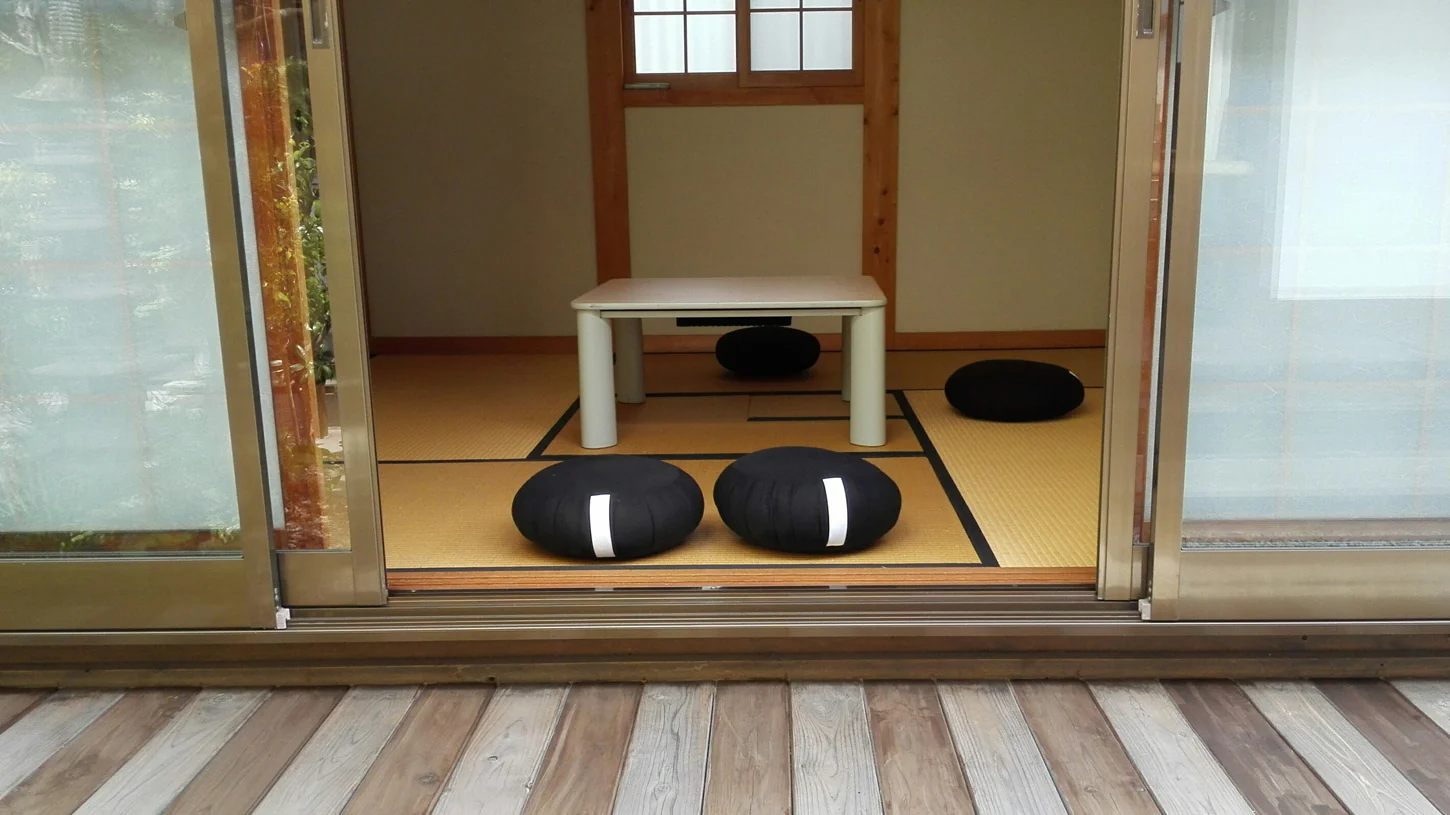
For local people, a temple can be a place to remember family members, speak with a priest, attend a ceremony, sit quietly, copy a sutra, or simply stop by. Some visits are solemn. Some are practical. Some are casual.
At Ikkeji, the temple's work includes Buddhist services, memorial traditions, zazen, sutra copying, seasonal gatherings, and small community activities. These pages introduce these customs for readers interested in everyday Buddhist life in Japan.
Many Japanese temples help families remember and honor those who have died. Memorial services, graves, family altars, and annual observances are part of how people continue relationships with those who have passed away.
Zen practice is not limited to monks. Sitting quietly, listening to a Dharma talk, copying a sutra, and sharing vegetarian temple food are all ways to step away from daily noise and return to the present moment.
Temples are often imagined as old buildings, but they are also maintained by people: priests, families, neighbors, participants, and visitors. Sweeping, preparing offerings, greeting guests, and keeping the grounds open are part of the temple's life.
Visitors may notice that the temple is historic, but also personal, lived-in, and closely connected to the neighborhood.
Much of temple life happens quietly. A family may come to remember someone. A neighbor may stop by with a question. A priest may prepare for a ceremony, clean the hall, or listen to a concern that does not fit neatly into public information.
This kind of work is modest, but it is one reason temples remain part of Japanese local life. Ikkeji is not separate from the town around it. It is a small place where grief, gratitude, practice, and ordinary conversation can all have room.
Alongside formal Buddhist services, Ikkeji hosts activities such as zazen, sutra copying with shojin ryori, temple yoga, herbal tea gatherings, and early morning reading. These are simple ways for people to enter the temple without needing a special religious occasion.